JUAN PABLO BALCAZAR – Suite Resbalosa

Suite Resbalosa

Artist : Juan Pablo Balcazar
Release Date : October 6, 2020
Label : Fresh Sound Records
Format : CD

Music composed by Juan Pablo Balcazar

Recorded at Underpool Studios, Barcelona, July 12, 2018

Mixed & Mastered by Hartosopash (Javier Rodríguez) at Metropol Studios, Madrid, November 2018

Design & Cover Art: TheLibrarian

Produced by Juan Pablo Balcazar

Executive Producer: Jordi Pujol

Buy album:

Balcazar is one of the pillars of the Barcelona jazz scene, and has proven himself not only to be a bass player of great imagination, taste and artistic integrity, but also a prolific and interesting composer. This time around his music exudes strength, skill and conviction, but also a feeling of understated melancholy that pervades the Suite.


For his Suite Resbalosa, Balcazar assembled a good, tightly-knit unit that delivers intimate conversations between its five members throughout the set, following the somber but gentle groove —easily recognizable, easily assimilated— from the leader’s music. The group includes two alto saxophonists, Marcel·lí Bayer and Joan Mas, pianist Antonio Mazzei from Venezuela, and drummer Oriol Roca. They achieve a kind of vital transcendence in each performance, sustaining, developing it with the strong, personal, emotionally gripping approach that is so forcibly on display in this session. The texture of each piece is warm and thick, and the moods are reflective and yearning. The ensembles are particularly striking, harmonious and rich in counterpoints, full of intriguing color changes and vigorous line movements.


This quintet traverses the ridges and troughs of the music with sensitive control, where each member’s skill as a soloist and improviser, the clarity and sheer musicality of their ideas, and the affinity with each other, create a cohesive ensemble sound which speaks for itself, growing through the moving eloquence of Juan Pablo Balcazar’s music and his work as a leader.


Text by Jordi Pujol


Juan Pablo Balcazar: double bass

Joan Mas: alto saxophone

Marcel·lí Bayer: alto saxophone

Antonio Mazzei: piano

Oriol Roca: drums


www.freshsoundrecords.com

ORIOL ROCA: CHARLANDO LARGO Y TENDIDO. Entrevista por Pachi Tapiz (interview)

Long interview (in spanish) from 2011 by Pachi Tapiz, editor on Tomajazz

(…) Oriol Roca (1979) es uno de los bateristas con mayor proyección de nuestro país. Es integrante de la Piccola Orchestra Gagarin y el Vrak’Trio. Dos formaciones muy peculiares de batería, guitarra y chelo (la primera), y tuba, flauta y batería nuevamente (la segunda). En 2011 estas formaciones han publicado los más que recomendables Platos combinados(Piccola Orchestra Gagarin; Whatabaout Music) y Crossroads Project (Vrak’Trio; Labelmanivelle). También ha participado en el recién publicado Maitia (Quadrant Records) de David Mengual. Pachi Tapiz habló con él. La idea inicial era hacerlo sobre estas formaciones y sus grabaciones. Sin embargo, las cosas no siempre son como se pretende que sean y unas cosas fueron llevando a otras… He aquí la conversación al completo (Continue reading)


DAVY LYONS – The Human Factor

THE HUMAN FACTOR


Artist : DAVY LYONS

Release Date : March 2023

Label : King Forward Records

Format : CD

Produced and arranged by David Duffy

Recorded at Vertigo Studios (Spain). Engineer and mixing: Ferran Donatelli. Mastering: Victor Garcia.

CD & Booklet Design: Sandro Raschle. Photographer: Adam Heffernan

Buy album:

Originally from the Crosstown area of County Wexford, in south east Ireland, his new album, ‘The Human Factor’, follows on from his debut, ‘Evidence’, and shows an artist who is growing both lyrically and musically. The album begins with the sublime, ‘Lady Luck’, which is a moody, jazz-infused, blues-folk number that eases the listener in to the album with a warm, welcoming embrace.


Guitar and vocals: Davy Lyons

Double and electric bass: Juan Pablo Balcazar

Drums and precussion: Oriol Roca

Piano and keyboards: Toni Saigi

Violin: Nacho López

Backing vocals: Ivette Villà

Clarinet, bass clarinet and saxophone: Gabriel Amargant

Guitars, dobro and pedal steel: Kealan Kenny


All songs written by Davy Lyons

Produced and arranged by David Duffy


www.davylyons.com

DISCORDIAN COMMUNITY ENSEMBLE – SONGS FROM THE UNREAL BOOK

Songs From The Unreal Book

Artist : Discordian Community Ensemble

Release Date : April 5, 2020

Label : Discordian Records

Format : Digital

Composed and conducted by El Pricto

Recorded live at Sinestesia, Barcelona on December 12, 2018.
Mixed and mastered by El Pricto

Cover art and design by El Pricto (extract from the graphic score of “Omaggio a C.G. Jung”)
Backcover design by Aorita

Produced by Discordian Records

Buy album:

Songs without words for a world without meaning.
Dedicated to all humans during the crisis of Covid-19 pandemic, because life itself is the meaning.

The Unreal Book is a collection of graphic scores created by El Pricto and some of his friends. To buy the upcoming physical format of the Unreal Book, contact the label at discordianrecords@gmail.com.


Personnel:


Ilona Schneider: soprano
Pol Padrós: trumpet
Melisa Bertossi: tenor saxophone
Francesc Llompart: violin
Diego Caicedo: electric guitar
Javi Garrabella: electric bass
Oriol Roca: drums

MUT TRIO – 3369

3369

Artist : Mut Trio
Release Date : December 29, 2013
Label : Discordian Records
Format : CD

Recorded on May 12, 2013 by Josué Pascual at El Cuartito de Nora, Vilassar de Dalt, Barcelona.

Mixed and mastered by Josué Pascual and Miguel Fernández

Cover design by Alex Juan, back cover design by Aorita

Produced by Mut Trio

Go to MUT TRIO

Buy album:

All music composed by Miguel Fernández, Oriol Roca and Tito Juan, except If I Only had a Brain by Harold Arlen and Jalisco by Manuel Esperón


  • Miguel Fernández: tenor and soprano saxophones
  • Albert Tito Juan: electric guitar
  • Oriol Roca: drums

Press


It’s criminal, really. A long-standing Barcelona trio with a unique and idiosyncratic style and a repertoire that combines semi-composed themes with quirky improvisation, that somehow manages to unite elements of free jazz with more conventional stylings… and their 27 April 2015 gig at Robadors 23 begins with an audience of four. Now, granted it’s a Monday night but come on, Barcelona – make an effort, please!

Having got that off my chest, I have to admit that there was something special about being part of such an exclusive event; and certainly, the small size of the audience didn’t seem to dampen the spirits on-stage who dealt out nearly an hour and a quarter of exquisite music…

One thing the MUT Trio does not do is hurry. In fact, time seemed to slow in the presence of Tito Juan’s atmospheric chording and lingering single notes. Roca enters the picture with some muted sound-making as he runs plastic bags, shells (I think) and other objects over the drum kit. Fernández stands apparently waiting, inactive, with the horn hanging slackly… but faintly the subtle percussive sound of fingers on saxophone keys can be heard. After a single sonic swipe, languorous melodies begin to emerge from Fernández’ tenor, as Roca immerses himself in his own rhythmic world, and Juan commences a series of dissonant and angular interpolations (in the mathematical sense rather than the musical). It’s a four-way impressionistic soundscape in which silence plays the fourth hand – not for nothing are they named “mut” (Catalan for mute).

Then Fernández adds a brief touch of Coltrane’s tone (I’m pretty sure I imagined it, but for a second there I thought he quoted a fragment of A Love Supreme…) and at the same time, Juan dials up the distortion on his Fender amp – there’s an instant of juxtaposition and then a rapid and complete dissolution leaving Roca’s drums to gently fill the quiet. There’s a constant and spiralling progression happening here which nevertheless feels freeform in nature; ever-evolving, never resolving.

The audience swells to six as another theme commences. The tenor drones and weaves, with a subtle hint of North Africa about it, waiting for the guitar (a rather stunning Paul Reed Smith, by the way) to begin a muted engine-like vibrating rhythm. Roca enters into another complex and unpredictable series of patterns which would serve most other drummers as a solo, but here it’s simply his agile contribution to the landscape. There’s definitely something about the febrile intimacy of these tunes which suits the close environment of Robadors 23. A little later on, Juan digs in with an overdriven tone and Fernández joins him in a simple ascending riff, played in unison, and the combined sound of guitar and saxophone can be felt directly to the chest, not just the ears – a sublime and practically telepathic moment.

MUT trio – if you thought about going and didn’t, you should have. Dave Foxall, Jazz Journal UK (May 2015)


A few years ago, I reviewed (favourably!) an album by the Miguel Fernández Quintet (“Transplanet Species”), I think it even made my Top 5 of 2011 list for Jazz Journal. I still play that disc every now and then and I was keen to finally hear Miguel Fernández play live and find out what he’s into these days. The answer seems to be something a little more abstract than his Quintet fare and none the worse for it. Adjectives that occurred were: painterly, impressionistic, moaning, dissonant, minimalist – all good words and an indication that the MUT Trio were overcoming the sterile atmosphere of the venue! MF’s sax was questing in its ebb and flow; Oriol Roca’s drums were busy yet delicate, playing the ‘whole kit’ for the broadest possible sonic palette; Albert Juan’s guitar was primarily textural and bass-heavy, adding washes of sound to the backdrop. The verdict? A mature-sounding improvising trio eschewing the relentless blowing of clichéd free jazz in favour of something more sophisticated, transporting, and no less free-sounding. Dave Foxall, A Jazz Noise (January 2015)


3369…tiene que ser algo más que una cifra. Es una serie numérica que esconde quizá una regla mnemotécnica: 3+3=6 +3=9… El 3 como base en un planteamiento aritmético, pero también geométrico: 9/3= 3… Este consolidado trío, que se fundó en 2009, sorprende desde la primera escucha. En él se alternan piezas cortas con largas en un orden que anticipa un uso narrativo o, por qué no, combinatorio, que es cómo las matemáticas cuentan una historia con algo de azar. No vamos a negar, ni creo que sea la pretensión de los músicos, que existen inevitables vínculos de filiación con el sonido y el espacio del histórico de Motian-Lovano-Frisell. Puesto que sería difícil abstraerse a su fuerza gravitaroria con este formato e intenciones, construyendo ese lirismo desvaído, ese nervio cruzado y metálico entre planos en suspenso. Saxo, guitarra y batería, mil formas de conjugar química y física desde las matemáticas. Habla MUT de textos literarios al referirse a sus temas, una intención narrativa que parece sujetarse con “If I only had a brain”, pieza lo suficientemente evocativa (El Mago de Oz, Bill Friselly Elvis Costello) para posibilitar un inesperado espacio de “realismo mágico” a “Jalisco no te rajes”… Y es cierto que se aprecia un cierta intención de relato traído al mundo oral más espontáneo de la improvisación, como también sucedía con el trío de Motian en aquél primer disco que tenía -no por casualidad- el literario título de It should have happened long time ago… Pero esto es sólo el comienzo que sirve para situarnos en lo dicho, en un sonido y un espacio de aperturas y ángulos, de planos y climas, aunque también de líneas que pueden sugerir el lenguaje de Ornette Coleman (esa aparición de “folclore” antes que standards) o incluso, en esa estructura lineal acabada aunque no evidente, por Lee Konitz. Pero la lectura es otra, porque el relato ya no es el mismo aunque tenga un prólogo conocido. Un grupo a seguir.” Jesús Gonzalo, Tomajazz (March 2014)


La teoría de cuerdas pone de manifiesto que cualquier objeto puntual en realidad está conectado con un todo, con un global, al que está unido mediante vibraciones o alteraciones de la materia. Estas vibraciones bien pueden producirse mediante la música, como la que hubo el pasado domingo por la tarde en el Centro Cultural del Matadero. Con motivo de las celebraciones del día de la música actuaba MUT Trío, aunque el público, que quizá ande estos días en otro tipo de celebraciones, acudió con cuentagotas a la cita. MUT Trío es una banda de free jazz improvisado compuesta por Albert Juan a la guitarra, Oriol Roca en la batería y Miguel Fernández como líder y saxofón tenor y soprano. A este trío y con motivo de la gira en la que se encuentran inmersos se les ha unido el virtuosísimo contrabajista Masa Kamaguchi, todo un lujo poder contar con un músico de esta talla, pero para ser justos, los cuatro músicos eran realmente buenos y es lógico, improvisar no es sencillo. La improvisación no existe, o quizá sí, pero no deja de ser una explosión creativa en el mismo instante, y esta explosión se basa en nuestro subconsciente, en nuestro todo, de nuevo revisando la teoría de cuerdas para buscar una melodía, un fraseo, pasarlo por la deconstrucción del free jazz y lanzarlo al mundo. Para esto hace falta un amplío conocimiento musical de modo que uno pueda estar en distintos estados a la vez. A parte que la improvisación no es sencilla, tampoco es fácil hacerse entender con otros tres tipos en una jerga que estás pactando en ese momento. Con ello se alcanzaban grandes cotas de belleza, aunque los cenits en alguna ocasión venían precedidos de frecuencias de búsqueda, inquietantes, delicadas, buscando el hueco por el cual los cuatro podían comunicarse con todo el público. De esta manera se pudo llegar a escuchar una versión deconstruida en modo free jazz del popular tema “Ay Jalisco no te rajes”, uno de los instantes más bonitos y curiosos de todo el concierto. Además, aprovechando el silencio sepulcral que se forma en casi todos los conciertos que se celebran en el Centro Cultural del Matadero, generaron una pausa que casi pareció una versión del tema 4’33’’ de John Cage, para poco a poco ir adentrando los instrumentos hasta formar una nueva frecuencia efervescente y brillante, un brillo tan intenso que parecía estar roto. Durante hora y media estuvieron dando un repaso a todos los espectros del jazz, desde la pausa en la que se oían todos los movimientos de los músicos hasta la efervescencia más epiléptica, incluso las dos seguidas, pausa/ritmo/pausa. El jazz es un terreno de exploración y conocimiento. Para terminar el concierto, Miguel Fernández cogió el micrófono para agradecer a todo el público la asistencia, presentar a la banda e interpretar una última pieza con la cual se despidieron tras un largo aplauso de todos los asistentes. Una despedida a la que se une la programación musical del Centro Cultural del Matadero, pero tranquilo, es sólo hasta septiembre, hasta entonces tocará inventarse algo o escuchar más jazz, el estilo de música más bello después del silencio.”Antonio Romero, Agitado pero no mezclado (June 2014)

ORIOL ROCA – LA TOMBA DEI GIGANTI

La Tomba dei Giganti

Artist : Oriol Roca

Release Date : July 6, 2010

Label : Whatabout Music

Format : Digital

Recorded live at Festival Isole che Parlano (Palau, Italy) by Roberto Monari September 11th 2009. Mixed and mastered by Dave Bianchi at The Emergency Room Studio (Barcelona). Cover artwork by Andrea Cirotto. Photography by Nanni Angeli


Go to ORIOL ROCA

Buy album:

Barcelona born drummer Oriol Roca had no intention to release a solo album. He didn’t even plan to perform solo, for that matter. And yet, La Tomba dei Giganti is his first outing under his own name. In August 2009, Paolo Angeli, an amazing Italian improviser, invited Oriol to perform at Isole che Parlano, an arts festival held in the tiny village of Palau, in the Italian island of Sardinia. Italian sound engineer Roberto Monari happened to be there with his recording equipment to document the festival. Oriol was struck to recognize himself so strongly in the music, and he realized it was closer to the way he felt about music than anything else he’d ever done before. And thats how Roca’s first ever solo album, recorded on the evening of his first ever solo performance, came to be.


  • Oriol Roca: drums, percussion, flute and other objects

Press


Perhaps it’s the restraint displayed by Roca that makes this track so compelling, but the five minutes flew right by and I was sad when the album ended. All About Jazz (November 2011)


(…) Oriol Roca, baterista aunque mejor sería decir percusionista, del que siempre he pensado que tiene una gran inteligencia instintiva, (escuchen sino su disco en solo La Tomba dei Giganti). Germán Lázaro, Cuadernos de Jazz (April 2012)


Què és la vida? Què fou primer? D’on venim? On som? On anem? Preguntes que de ben segur es feien les comunitats sedentàries que durant l’Edat de Pedra van construir el monument funerari avui conegut com La Tomba dei Giganti, a la localitat sarda de Palau, i a on a l’actualitat s’hi celebra el festival Isole che Parlano. Què haurien pensat els enterramorts d’aleshores si els haguessin explicat que 3.600 anys més tard un bateria els explicaria l’origen d’una cosa que en diuen música? Oriol Roca, reconegut timbaler de les noves generacions del jazz barceloní, va ser convidat el 2009 a oferir un solo a l’indret més espiritual de Palau. I, dit i fet, se li va acudir mirar d’explicar – interpretar – l’origen de la música com a un fenomen derivat de la invenció – o constatació – del ritme; i del ritme com a una part inherent a la condició humana.

La Tomba dei Giganti és, doncs, un viatge a la recerca de l’abstracció a partir de la nuesa d’un senzill batec de metrònom que, des del primer tall del disc – “Sound” -, transita cap a una major complexitat conceptual. Del so passem a la música – “Music” -, amb un ritme dispers a partir d’harmònics i escomeses melòdiques. El metrònom llavors s’apaga i el so es converteix en moviment: “Dance”, l’inici d’un discurs enrevessat que assoleix el seu màxim clímax a “Life”, metàfora del nomadisme i l’exploració. Un passatge introspectiu, “Wisdom”, dóna a pas a la bretolada del disc: una singular interpretació d’“Els Segadors” amb una flauta d’èmbol. Un final només comprensible si se’ns explica que el treball fou enregistrat un 11 de setembre, i que ens du a concloure que els himnes nacionals – com a gènere musical i com a significat simbòlic – no resten tant lluny del més absolut primitivisme humà. En tot cas, el més significatiu d’aquest treball és que ens trobem davant d’un dels escassos bateries – i músics en general – capaços de construir amb el seu instrument un bell i poètic discurs narratiu. Martí Farré, Nativa (October 2010)

GIOVANNI DI DOMENICO & ORIOL ROCA – SOUNDS GOOD

Sounds Good

Artist : Giovanni di Domenico & Oriol Roca

Release Date : December 1, 2012

Label : Spocus Records

Format : CD

Produced by Giovanni Di Domenico and Oriol Roca. Executive Producer: Waso De Cauter. Recorded by Toni Paris at Estudi 44.1 Mixed by Giovanni di Domenico. Mastered by Dave Bianchi at Emergency Room. Pictures and design by Waso De Cauter – Deadline Constructions

Go to DI DOMENICO · ROCA

Buy album:

Italian piano player Giovanni di Domenico and Oriol Roca, musical partners for fifteen years, they start playing in duo in 2010 to explore the sound possibilities of their instruments, focusing on silence, density and space in music through improvised fragments and some original compositions. In 2011 their first studio album is released on belgian label Spocus Records.


  • Giovanni di Domenico: piano
  • Oriol Roca: drums


www.spocus.be


Press


Au piano, Giovanni Di Domenico disperse les notes au gré des courants. Prêche une angoisse latente. Laisse s’épanouir l’espace. Etale la phrase. Aime à filtrer les mêmes sentiers. Frôle le sirop ECM. Emprunte la résonance à Monsieur Paul Bley. Déambule et, encore, étale. Consulte le drame. Censure sa main gauche. Racle le plus profond des fréquences graves. Retrouve l’angoisse originelle. A la batterie, Oriol Roca martèle amoureusement ses fûts. Laisse la vibration se fendre jusqu’à terme. Emprunte la résonance à Monsieur Paul Motian. Convoque un tempo métronomique sur cymbale usée. Abuse le bol tibétain. Ce que font pianiste et batteur n’est pas nouveau, n’est pas révolutionnaire. Mais sensible: assurément. Le Son du Grisli (April 2016)


El baterista Oriol Roca no sólo está desarrollando una interesante carrera dentro de nuestro país en grupos como MUT Trío, o junto a Giulia Valle y David Mengual por citar algunos. También tiene un reconocimiento más allá de nuestras fronteras con grupos como VRAK’ Trio, la Piccola Orchestra Gagarin, o con el pianista Giovanni Di Domenico, tal y como ocurre en Sounds Good, publicada en 2012 en el sello belga Spocus Records. En esta grabación se incluyen siete improvisaciones, más dos temas compuestos por cada uno de los músicos. Roca y Di Domenico establecen una relación musical entre iguales. Esto no quiere decir que no haya momentos en que uno de los dos sea quien se erija en la voz cantante, sino que van cediendo ese papel cuando no están en un plano de igualdad. Los temas resultan sumamente variados. “Hermafrobeat” resulta muy animado. “Music Not Going Anywhere” es una de las joyas del CD: su título no es únicamente una declaración de intenciones, sino la mejor descripción que se puede hacer a la exploración sonora de ambos músicos. “Neve Marina” casi se podría calificar de música programática. “Song For Masha” es un precioso tema de Oriol Roca. En “Don’t Doubt Here Doubt There” ambos músicos dan una buena lección de cómo trabajar con la tensión musical. “Avoid A Void” es otro tema muy bonito con el piano goteando sus notas, mientras que “H.I.M.R.” es una composición de Di Domenico solemne, lírica, en la que el espacio y el silencio son elementos fundamentales. Pachi Tapiz, Tomajazz (April 2014)


A short record of piano/percussion avant-jazz between Giovanni di Domenico (Arve Henriksen, Nate Wooley, Jim O’Rourke) and Oriol Roca. Di Domenico is here in acoustic mode – and so is Roca. Improvisation or composition? Surely a little of both – some stop/go moments are simply too well coordinated to be freely improvised. Pieces are short, delicate, often melancholic without getting sappy. Roca often restricts himself to a few percussion instruments and get the most nuances out of them.Sounds Good is an unpretentious and quite convincing meeting. François Couture, Monsieur Délire (April 2014)


Questa collaborazione con il batterista Oriol Roca sposta il suo baricentro su quelle movenze contemporanee che erano appena accennate in “Ghibli” e “Seminare Vento”. “Soundabout” vi introduce ad un clima quasi Ligetiano, per poi comunque rientrare in una “pensosità” espressiva coadiuvata da effetti percussivi che rendono il linguaggio sospensivo; in “Sounds good” trovate tutto il polistilismo di Giovanni: gli spazi atonali, la ricerca di un giusto equilibrio tra silenzio e note, le percussioni che si muovono sommessamente sullo sfondo, e, in quantità minori l’amebluement trasversale di Satie e le angolature di Monk; in “Avoid the void” si avvertono persino brevi scampoli di minimalismo; ma la cosa che colpisce è il validissimo tocco pianistico che segue canoni di raffinatezza che appartengono al mondo degli esecutori classici. Ettore Garzia, Percorsi Musicali (January 2013)


Frenetic rhythms, spastic melodies, yet oddly tuneful.  I’ve been poking around drummer Oriol Roca‘s music for a couple years now, and he always finds a way to gain interest, and pianist Giovanni di Domenico is an excellent foil for Roca on this recording.  Totally random, but would be interested to learn if the song “Hermafrobeat” sends anyone else’s cats into a crazed tailspin like it does mine. Dave Summer, Bird Is The Worm (October 2013)

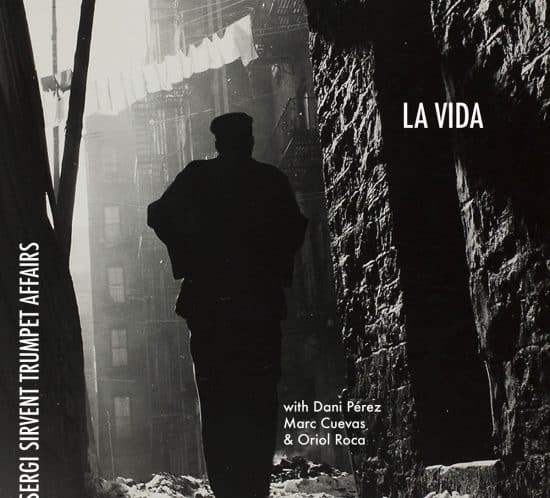
SERGI SIRVENT TRUMPET AFFAIRS – La Vida

LA VIDA

Artist : Sergi Sirvent

Release Date : January 2019

Label : Selfishmarket

Format : Digital

Recorded by Jordi Vidal at Laietana Studios, Barcelona on December 21st 2018. Artwork by Núria Montoriol

Buy album:

Sergi Sirvent: trumpet & composition
Dani Pérez: guitar
Marc Cuevas: double bass
Oriol Roca: drums

GIOVANNI DI DOMENICO & ORIOL ROCA · Upcoming new live album on 2015

On April 2014 we were invited to play in duo with italian piano player Giovanni di Domenico at Cicle de Jazz i Músiques Improvisades de Centelles, a small festival that on its second edition festival programmed a list of very nice duo concerts including Jorge Rossy and Marco Mezquida, among others. We asked our friend and producer Dave Bianchi from Whatabout Music -who had already mastered our previous album Sounds Good (Spocus Records 2012– to bring his equipment and record the concert. Luckily we did it because it was a very nice evening!

After some months we listened back the recording and decided to release it on Dave’s label Whatabout Music. Looking forward to finish the mix and have it ready! We still need a name for it…


Picture by © Joan Cortès


HBS1 – HOT BLUES SESSIONS

HBS1 – HOT BLUES SESSIONS

Artist : Different artists / Compilation

Release Date : January 2023

Label : Hidden Track Records

Format : Vinyl / Digital


Idea, creation and direction: Cels Burgès
Production: Cels Burgès and Gès Burgès
Mixing and mastering: Àlex Almirall
Artwork director: Sebastián Geregz
Artwork: Arnau Garcia
Front and back cover: Marc González
Video: Joel Burgès


Buy album:

Hot Blues opened its doors in Igualada in 1998. A bar, café and music pub run by Marien Flores and Gès Burgès. A unique place that soon became a meeting point for the city’s music lovers, where they could share their passion for music. A place with a lot of personality where LPs or CDs were always playing instead of the radio, and where new music was exchanged and listened to on a daily basis.


HBS1 – Hot Blues Sessions arrives in 2022 as a tribute to that space that was unique and vital for the development of the Catalan music scene. A place where you could hear for the first time what are now great artists. A special limited edition vinyl that captures the cultural facet and recovers a selection of the concerts that took place in the Hot Blues concert hall (Igualada) from 2008 until its closure in 2017, after 19 years of activity.


HBS1 creates a sound journey based on twelve different artists and groups. A non-stop musical session where musicians, genres (pop, rock, blues, jazz, free jazz, electronic, afro, flamenco or folk) and different dates coexist, reflecting in the most sincere way the open and eclectic programme offered by the venue to the public.


The visual part of the vinyl brings a small photographic and graphic compilation of the concerts, made by the members of Hot Blues, by the audience or by professional photographers and illustrators. Hot Blues Sessions is a project headed by Cels Burgès, son of Marien and Gès, Hot Blues’ founders, with the collaboration of Hidden Track Records, Bankrobber and Underpool.


Oriol Roca (drums) appears on “Dos Camells” by Nico Roig (guitars) with Xavi Lloses (keyboards) and Carola Ortiz (clarinet). Recorded live at Hot Blues on 2014.


www.hiddentrackrecords.com

X